Newsletter
Help us make a difference

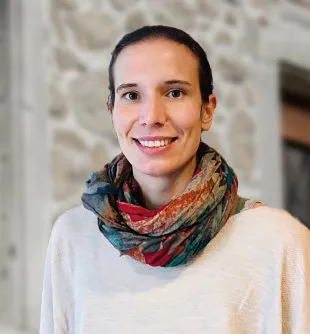
«I would not wish this experience on any family, nor the suffering in silence that often comes with it. In hindsight, however, I am grateful for what I went through, as it made me stronger and strengthened us as a family.»
Year of birth
1982
Marital status
Partnership
Children
Girl (2018) and Boy (2019)
Occupation / current role
Strategic project management, yoga teacher
Hobbies
Sports, travel, nature, my family
First PPD onset
After the birth of my daughter, but not recognized; PPD diagnosed 9 months after the birth of my 2nd child
PPD lasted approximately
PPD lasted about 2 years with ups & downs
History of depression / depressive mood
None
Signs / symptoms of my PPD
Signs
Anger over trivial matters
Insomnia
Exhaustion
My behavior and thinking seemed foreign to me / I no longer recognized myself
Triggers of my PPD
A combination of things: my tendency to want to achieve everything without asking for help; living in a new country with initially no social contacts
My PPD in a nutshell
I was used to having everything under control and being well organised. With the birth of my daughter, this system was turned upside down. No matter how carefully I planned, things often didn’t work out as expected. I became frustrated — sometimes excessively so.
Being new to a foreign country, having to build new relationships, and no longer working only made the situation more challenging.
When my second child was born, the system — and I — completely collapsed. I had always managed to do everything my own way, without help. This time, I couldn’t.
My anger turned into rage toward my children and my partner, often triggered by trivial situations. I slept poorly, cried frequently, and felt panicked at the thought of being alone with the children. Still, I tried to maintain a façade. I did not want to admit that I could not cope with two children at home — even though my partner was already taking so much off my plate in everyday life.
My father‑in‑law and the COVID‑19 pandemic ultimately played a decisive role in helping me out of the crisis. My father‑in‑law, because one evening he gently drew me out of my shell, listened patiently to my tears and pain, and — as an experienced caregiver — pointed me toward the EPDS. The pandemic, because spending five weeks in lockdown at my parents’ house made it clear that my symptoms did not improve, even with full support in caring for the children.
During this time, I finally found the strength to seek help. What a relief it was to receive a name for what I was experiencing, to be diagnosed with PPD, and to hear my psychologist say:
«You have already taken the hardest step — overcoming your hesitation to seek help. Now we will walk this path together until you feel better.»
And that is exactly how it happened.
Reaction from those around me
My partner, who had already encouraged me to seek help, showed complete understanding and supported me consistently and without complaint on my path out of depression. My family reacted with empathy, even though the topic was new and unfamiliar to them. I only shared my PPD experience with my circle of friends several months later, once I had begun to feel better.
Treatment (therapy)
Regular conversations with my psychologist via zoom (Corona)
Medication
Sertraline
What really helped me
The loving support of my partner, who made me feel that I no longer had to «function» or hold everything together. Being able to drop the façade and rebuild myself step by step — together with the support and conversations with my psychologist, and medication.
My realization
I would not wish this experience on any family, or for anyone to have to suffer in silence for so long. And yet, in hindsight, I am grateful for what I went through — it has made me stronger as a person and brought us closer and stronger as a family.
Today, I know that I do not have to do everything alone. Showing vulnerability and asking for help is not weakness — it is necessary. Above all, I have learned that PPD is an illness that can affect anyone.
So talk about your feelings. Do not hide them. I have found that as soon as you open the door to this topic, many people feel relieved and begin to share their own experiences.