Newsletter
Help us make a difference


Thursday, 3 September 2026
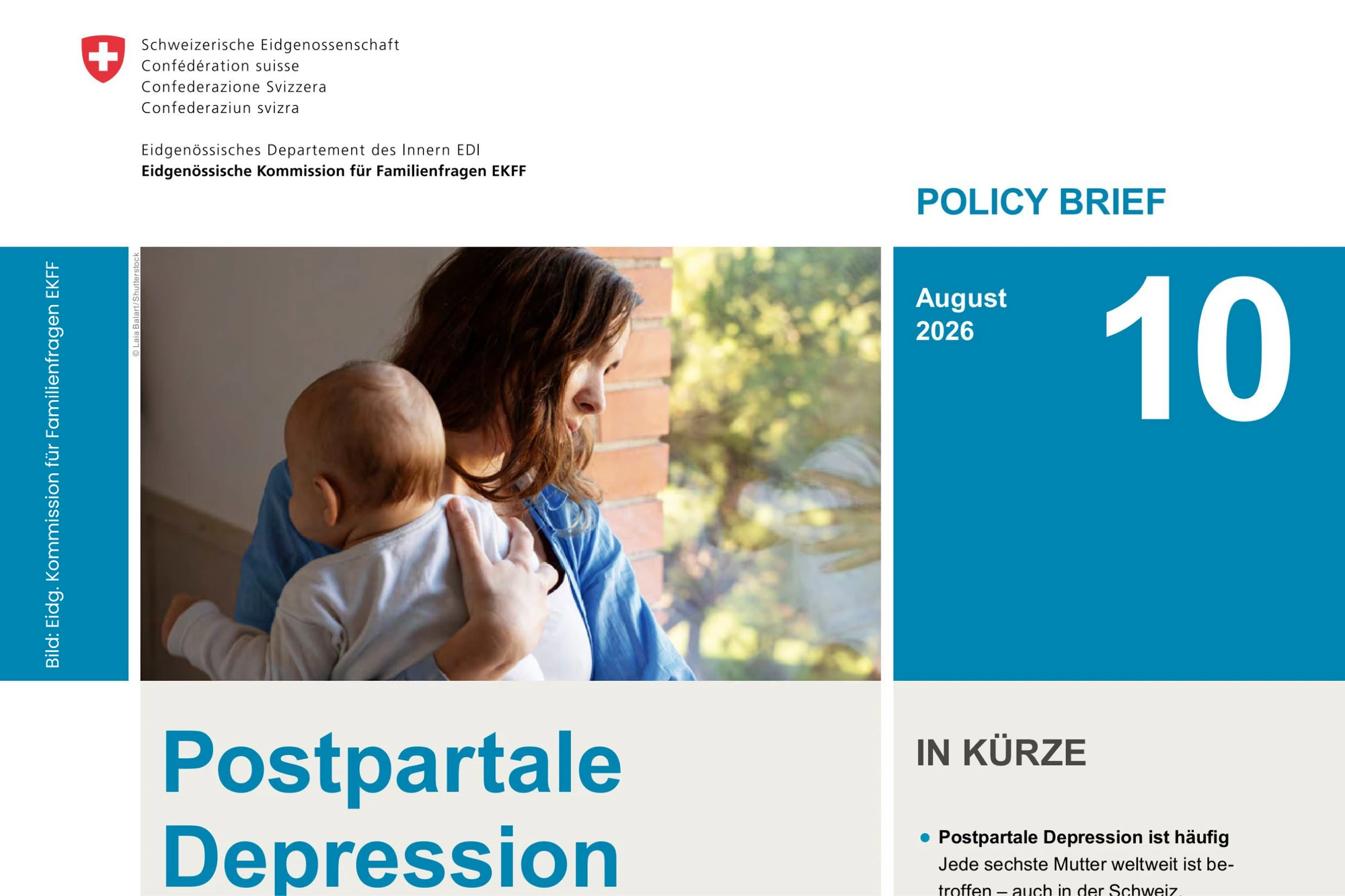
Postpartum depression (PPD) affects millions of women worldwide, and its impact reaches not only the mother but the whole family. Policy Brief No. 10 of the Federal Commission for Family Affairs (FCFA) (in German), published at the end of August 2026, summarises the current state of research and shows that although 12–15% of mothers in Switzerland are affected, there is still no specific national data. PPD is more than the well-known "baby blues". It can begin during pregnancy, occur up to a year after birth and, if left untreated, often lasts for weeks or months. And it is not only mothers who are affected: the second parent also has an increased risk of developing depressive symptoms.
The report sets out six recommendations for Switzerland:
National data collection on prevalence and regional differences
Mandatory screening during pregnancy and in the first year after birth
Expansion of care services (e.g. mother-baby units, better coordination)
Fair, multilingual access for migrants and socially disadvantaged groups
More equal and longer parental leave
100% wage replacement during statutory work bans or in cases of hazardous work
For us, the report confirms how important early detection, low-threshold support and peer exchange are. Many mothers and families feel left alone during this phase, precisely because PPD is still not visible enough and those affected are often ashamed to talk about it. That is why Periparto works on five levels: We create spaces where affected families and their loved ones can connect and find direct support. We train professionals so they can recognise warning signs early and refer families to the right support. We raise awareness among employers about the realities of this phase of life. We work to reduce stigma and build greater public awareness. And we are active in research and policy, for example advocating for the national data collection and fair, multilingual access to care called for in the report.