Newsletter
Help us make a difference

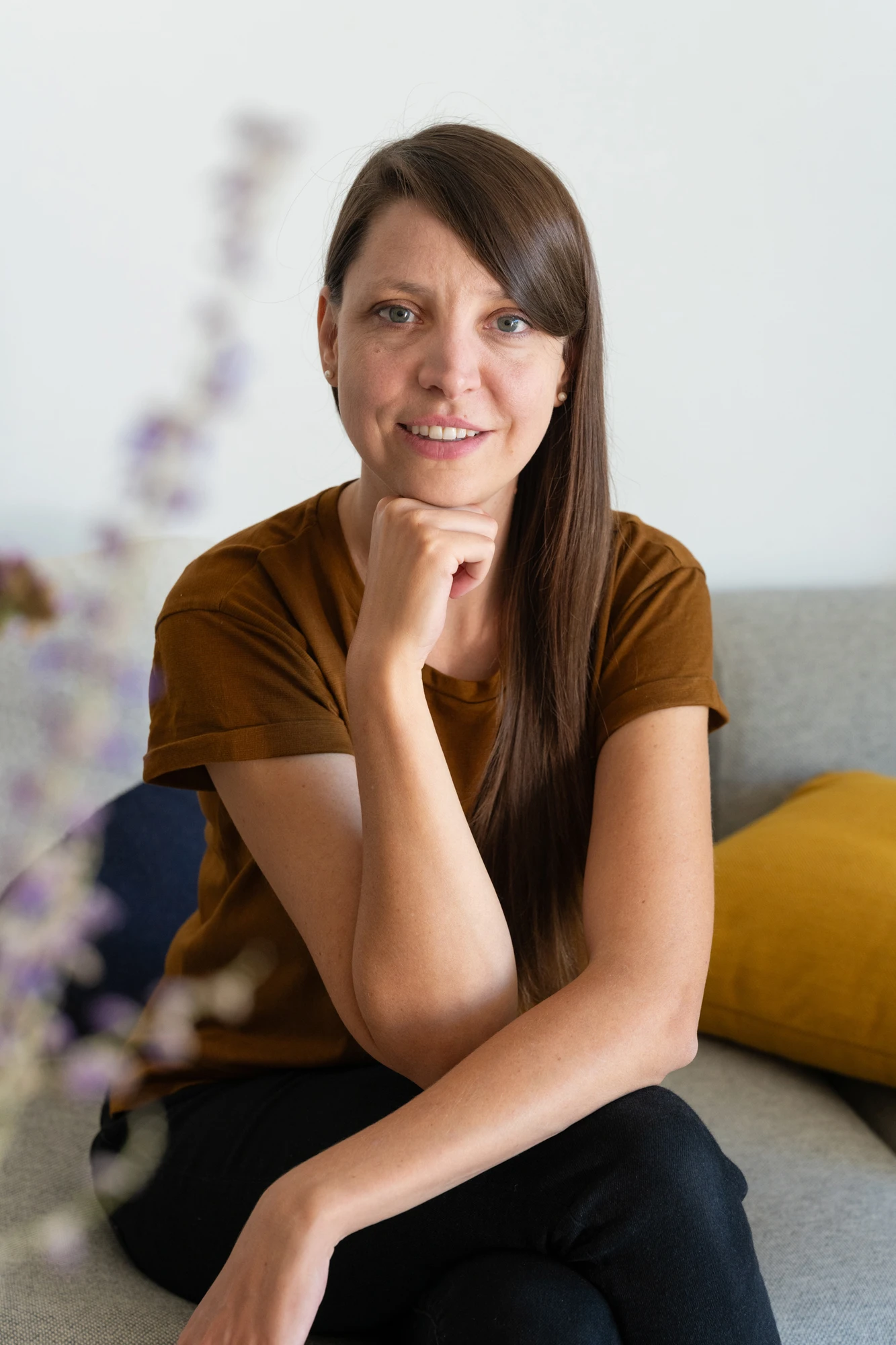
«It was a nightmare. But for me there was an awakening – and my life is more colorful today than before.»
Role at Periparto / since when engaged
Engaged with Periparto since 2024 as a mentor. Today I lead the support group for women who have experienced a postpartum psychosis.
Year of birth
1987
Family situation
I am married and have a son.
Children
One son, born in 2018.
Profession / current activity
As an EEH specialist advisor in training (since 2024), I accompany parents and their children during the early family period. I am also a partner at WEISSWERT GmbH for visual design and photography (since 2012).
Languages
German, French
My diagnosis / condition
Postpartum psychosis, also known as puerperal psychosis.
First signs appeared
In the first days after the birth of my son in October 2018.
Duration approx.
The acute crisis marked the first weeks after the birth. My path to recovery extended over several months.
History of mental illness
No prior conditions
Signs / symptoms
• Persistent insomnia and strong inner restlessness
• Increasing overwhelm, concentration problems and disorientation
• Altered perception and difficulty organizing my thoughts and communicating
Triggers
In retrospect, severe sleep deprivation and physical exhaustion after a long labor combined for me. I lacked rest and reliable support that would see us as a young family and our situation as a whole.
My story in brief
After the birth of my son in 2018, I developed puerperal psychosis. I was hardly sleeping, progressively lost my orientation and suffered from perceptual disturbances. Although we repeatedly sought help, my distress was not taken sufficiently seriously for a long time. Emergency interventions followed and a short psychiatric hospital stay with separation from my newborn son.
After returning home, a longer recovery process began. Emotionelle Erste Hilfe (EEH) played a special role: as a family we found space to process what we had experienced.
How did your circle react when you spoke about it openly?
My husband and family stood by me and sought support. Still, talking about what happened was difficult for a long time and associated with shame. Today I share my story deliberately in selected settings to create understanding and reduce prejudice. It is very important to me to raise awareness of mental health crises after birth and the needs of affected families — so that warning signs are recognized earlier, parents are taken seriously in their distress and receive appropriate support.
What does your everyday life look like today?
Today I combine family life with my work at WEISSWERT and accompanying parents and children. Emotionelle Erste Hilfe (EEH) has become an important part of my life over the years. From my personal experience came the desire to support families in stressful situations and to further my professional training.
What would you have liked to know back then?
Before the birth I knew the term postpartum depression; I had never heard of puerperal psychosis. I would have liked to know more about it and to find suitable support earlier. Above all, I needed someone to take my perception seriously: something is wrong, and I need help.
What helped me & my message
What really helped me
The support of my husband and being with my son, as well as the possibility of being back home. In Emotionelle Erste Hilfe (EEH) I experienced support that took time, listened and respected my pace. I was allowed to set boundaries and express needs.
What would you say to someone who is in the middle of it?
It was a nightmare. But for me there was an awakening — and my life is now more colourful than before.
Why do you engage with Periparto?
After my illness, it quickly became clear to me that I wanted to make a difference with my story. I wish that mental illnesses around childbirth are recognised earlier and that families receive appropriate support more quickly. With my experience I want to help destigmatise. With my EEH training I am deepening my professional skills to accompany parents and children in stressful situations.